

Direct cremations, also known as unattended funerals, have potentially changed how we moan the deaths of those we love. Taking away the option of a ceremony to celebrate a person’s life and to say goodbye in the traditional, ritualistic or customary way can affect how we grieve. Denied the opportunity to say goodbye at a funeral, memorial ceremonies after direct cremation provide closure and the opportunity to celebrate a life in a less formal way.
What is a Memorial Ceremony
A memorial ceremony is a gathering of people who come together to acknowledge the death of a person after or in place of a funeral in a crematorium, burial ground, place of worship or funeral ceremony venue. Traditionally they took place on the anniversary of a death, event, or if a funeral wasn’t possible. Now the popularity of memorial ceremonies after direct cremation has taken place have increased significantly.
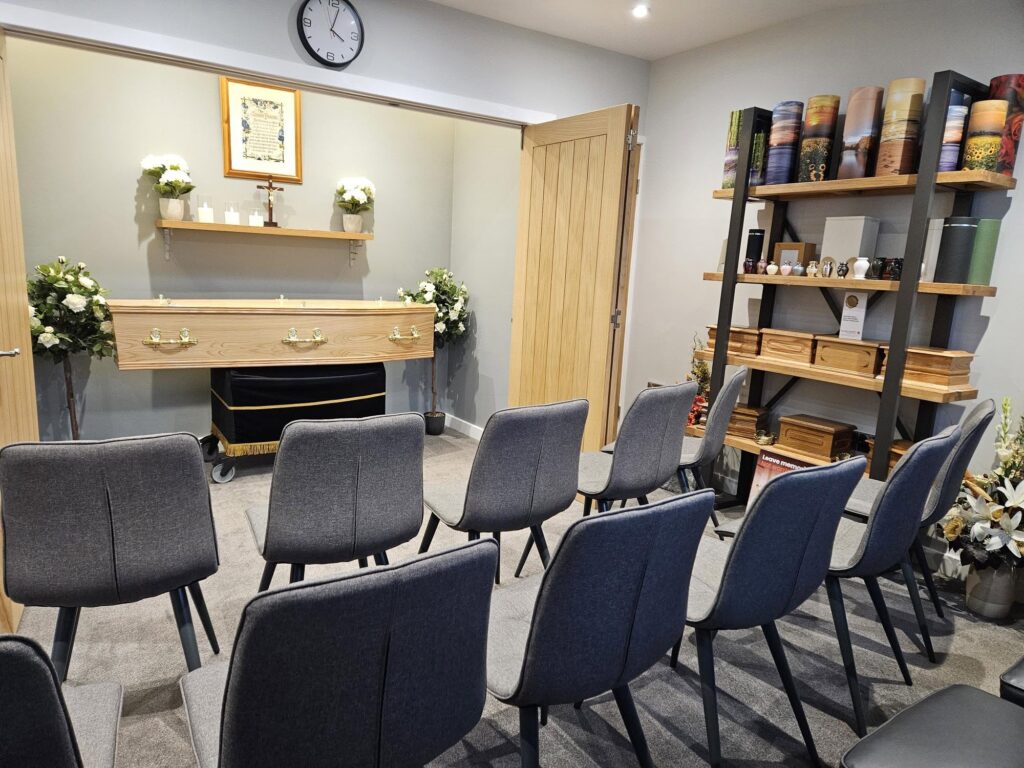
Memorial ceremonies can be formal, informal, celebratory and life centred. They can take place in a family garden, a hotel or a pub, outdoors, in a hired venue or in a location of personal choice. Many choose to have memorial ceremonies after direct cremation has taken place, some choose to hold them at the same time a direct cremation is happening. If a funeral director is involved rather than a commercial cremation company, a ceremony can be held in the ceremony room of the funeral directors. This one is a the small chapel at John Corner Funeral Service in Whitby.
What Happens During a Memorial Ceremony
Memorial ceremonies after direct cremation are unique to those they are for, and for those who want to say goodbye. Funerals are for the living, about those who have died, and they are an essential part of the grieving process. If a funeral does not or is unable to take place, families, friends and people who knew the person who has died are left without closure.
We hear stories and tributes, listen to music the person liked and say goodbye to the person as their coffin is lowered into their grave, descends or the curtains close during a cremation. Saying goodbye is an important part of learning to live without that person. When a person chooses to have a direct cremation, being able to say goodbye at a funeral ceremony isn’t possible.
This is why many decide to and need to have memorial ceremonies after direct cremation. There is the opportunity to reflect on the life of the person, celebrate their achievements, recall memories, funny moments, hear chosen music and gather to say goodbye.
Memorial ceremonies after direct cremation are usually less formal than a funeral. Not all want to wear formal clothing, opting instead to wear casual clothes. This can make the occasion seem more relaxed and easier to cope with. Formality can cause anxiety and nerves, an informal gathering in perhaps a familiar place can reduce anxiety and nerves.
Speaking in public is a fear and phobia for people, but many feel the need to speak during a memorial ceremony. Personal tributes, sharing memories and stories; words of love about the person who has died can all be comforting and beneficial to those present.
Lighting candles or planting a tree, sharing food all in one relaxed space can also take place during memorial ceremonies after direct cremation. Having children present and dogs in attendance are more likely occurrences than during a funeral. Funeral venues can have restrictions or parents can decide not to have their children attend because of the environment and funeral objects, particularly the coffin.
Funerals have time restrictions which must be adhered to prevent fines being issued and to ensure all other funerals which follow on the day run on time. Memorial ceremonies after direct cremation do not have the time restrictions if the chosen venue is booked for an event.
Scattering of Ashes After a Memorial Ceremony
If a memorial ceremony takes place following a direct cremation, this can include a scattering of ashes ritual. Making the ceremony feel more of a funeral ritual. Ashes can also be present if they aren’t to be scattered.
Direct Cremation and Grieving
Direct cremation is the right choice for many who have booked one or had one. They are cheaper, easier to arrange, do not require choices of coffins, cremation or burial, religious or celebrant led, flowers, guest attendance or car hire to be made. Adverts for direct cremation touch on these factors and state families can arrange the kind of their ceremony they would like afterwards.
Are they what families and loved ones want? We might believe we are helping our families and loved ones by taking these costs and decisions away from them, but what is the overall cost of them being denied a funeral? Funerals are for the living, about those who have died. These factors can cause additional feelings of guilt, sadness and increased grief. Are we really helping our loved ones, friends, community and all who have been affected by our death if they are unable to say goodbye?
This is why many are now having memorial ceremonies after direct cremation has taken place, or before it happens if the cremation has been arranged by a funeral director. It could be a well-attended event, or an intimate short ceremony of goodbye with only the direct family present.
Grief is without a time limit, and it is personal to everyone. It is possibly the strongest of human emotion and it is caused because of love, the end of a situation or an event out of our control. Grief is because of loss, and it is the emotion felt when we must live our lives and go about our daily routine in a different way; without a person, animal or people who we love.
We are now acknowledging the deep connection and love between humans and our furry companions, with pet funerals and animal crematoriums and burial grounds becoming more mainstream. Funeral celebrants receive requests for animal funeral ceremonies, animal coffins and ashes urns, headstones and memorial jewellery are widely available, yet human funerals are decreasing in numbers because of direct cremations.
Memorial Ceremonies After Direct Cremation
If you or a family member or friend have chosen or are considering having a direct cremation, having a conversation about a memorial ceremony before or after the cremation takes place should be considered. It might be our choices based on cost, decision making, ease, or not wanting our loved ones to have to attend your funerals which have caused you to come to the decision you have made. Discussing what they want, and need is important as being able to celebrate our lives and say goodbye could be of great importance to those who have to live in grief.
Together you can plan what you want and help them plan what they need. To book a memorial ceremony, or for further information on funeral planning, please contact me.